Zürich · Genomics · Data Science

I make complex
biology computable.

I work across experimental biology and data science—designing methods, generating genomic data, and building analytical workflows that turn it into interpretable biological insight.

SC.OUT / CELL MAP interactive
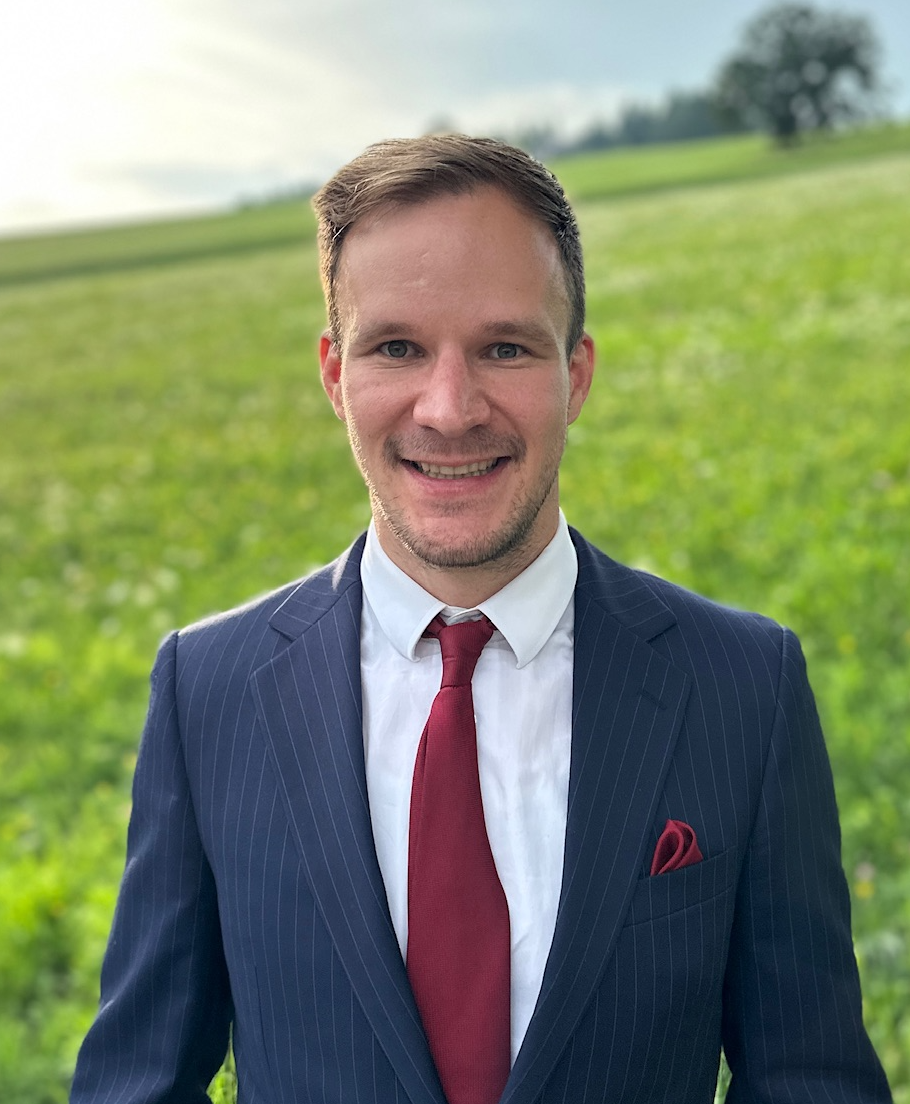
Portrait of Moritz Schlapansky
edited cells
transcriptome
Experimental designSingle-cell genomicsGenome editingReproducible pipelinesBiological interpretation

01 / Profile

One question.
Both sides of the bench.

I’m a bioinformatician and molecular biologist who likes understanding the full system: where data come from, how they were generated, and which analytical choices shape the conclusion.

Over more than five years, I’ve worked across single-cell genomics, high-throughput sequencing, cancer biology, DNA repair, and genome engineering. I develop reproducible workflows in Python, R, and Bash for Linux and HPC environments—but code is the means, not the end.

My strength is translating unfamiliar, messy domain problems into tractable questions, then taking ownership from experimental design and assay development through analysis, interpretation, and communication. That bridge between wet lab and dry lab is where I do my best work.

5+
years across experimental and computational genomics
300k+
CHF in competitive research funding secured
End-to-end
from biological question to decision-ready evidence

02 / Experience

A track record of building methods, not just running analyses.

Select a role to see the work behind it.

2020—2026 PhD Researcher / Postdoctoral ResearcherETH Zürich · Jacob Corn Lab

Led computational and experimental genomics projects with an emphasis on single-cell method development, genome editing, and DNA repair.

  • Developed scOUT-seq from concept through assay, sequencing, computational pipeline, interpretation, and publication.
  • Built reproducible Python, R, and Bash workflows for scRNA-seq, amplicon, long-read, and CRISPR-screen data.
  • Applied statistical modelling and interpretable machine learning to cell-state-specific DNA repair.
  • Advised collaborators on study design, platform selection, analysis strategy, and biological interpretation.
Single-cellGenome editingPython / RHPC
2018—2019 Visiting Scientist / Master’s ResearcherUCSF · Michael McManus Lab

Created a functional-genomics workflow for detecting and quantifying rare cell-state transitions.

  • Combined targeted RNA sequencing, complex ORF libraries, and computational analysis in a new high-throughput screening paradigm.
  • Developed a CEL-Seq2-based targeted sequencing method for low-abundance cell states.
  • Led a four-person undergraduate project team across library generation, experiments, analysis, and communication.
Functional genomicsORF screensTargeted RNA-seq
2018 Research Project · ImmunologyCeMM · Andreas Bergthaler Lab

Investigated how chronic viral infection interacts with liver metabolism in mouse models in a BSL-3 environment, contributing to work later published in Immunity.

ImmunologyMetabolismBSL-3
2017 Bachelor’s ResearcherIMP Vienna · Johannes Zuber Lab

Used genome-wide pooled screens and engineered cell models to identify synthetic-lethal dependencies in cancer and leukaemia.

  • Generated knockout and inducible-degron models for functional validation.
  • Adapted the auxin-inducible degron system for in-vitro and prospective in-vivo use.
Cancer biologyPooled screensDegron models

03 / Selected work

Biology in. Evidence out.

Three examples of how I connect biological questions, experimental systems, and analytical reasoning.

Project 01 · Method development

scOUT-seq

Connecting genome-editing outcomes to single-cell transcriptomes.

I developed an end-to-end experimental and computational method that links precise editing outcomes with transcriptional states at single-cell and single-nucleotide resolution.

Assay developmentSingle-cell sequencingMultimodal integrationBiological interpretation
Read the preprint

ACTIVE STAGE

01 · Genome editing

Introduce a defined perturbation while preserving the exact outcome each cell receives.

Project 02 · Genome integrity

DNA repair &
genome editing

Investigating cell-state-specific repair, large genomic alterations, synthetic lethality, and clinically relevant editing effects.

Project 03 · Perturbation biology

Functional genomics
& screening

Using pooled CRISPR and ORF screens to connect perturbations with high-dimensional responses and rare phenotypic states.

04 / Expertise

A connected toolkit.

Filter the map to see the methods, technologies, and environments I use to move from experiment to evidence.

Python scRNA-seq CRISPR R Scanpy Long-read sequencing Gradient boosting Assay development 10x Genomics Amplicon sequencing Bash Linux · HPC · Slurm Statistical modelling Seurat NGS library preparation Git Multimodal integration Differential expression CRISPR screens AWS Primary cell culture scikit-learn scATAC-seq Pipeline automation Opentrons

06 / Education & leadership

Scientific depth.
Organisational range.

2025

PhD in Biology

Computational & Experimental Genomics
ETH Zürich

2020

MSc in Molecular Biology

Molecular Medicine · With distinction
University of Vienna

2017

BSc in Molecular Biology

With distinction
University of Vienna

REPRESENTATION / OWNERSHIP

Board member

Represented more than 100 PhD students and postdocs at ETH, launched a speaker series, raised funding, and coordinated invited speakers.

TEAM / DELIVERY

Graduate school committee

Managed a team of six and delivered professional-development events, workshops, and retreats for more than 200 students.

07 / How I work

Principles over process theatre.

The habits I bring to projects, whether the starting point is a cell, a dataset, or an unfamiliar domain.

01

End-to-end thinking

Understand the data-generating process, not only the final table.

02

Translate complexity

Turn domain ambiguity into structured, testable questions.

03

Learn quickly

Enter unfamiliar technical areas when the problem demands it.

04

Own the outcome

Take responsibility for the whole problem, not an isolated task.

05

Communicate clearly

Make assumptions transparent and conclusions understandable.

08 / Contact

Have a complex problem?
Let’s make it tractable.

I’m interested in impactful translational research, data-driven problem solving, and teams that value both scientific depth and technical clarity.

Quick navigation